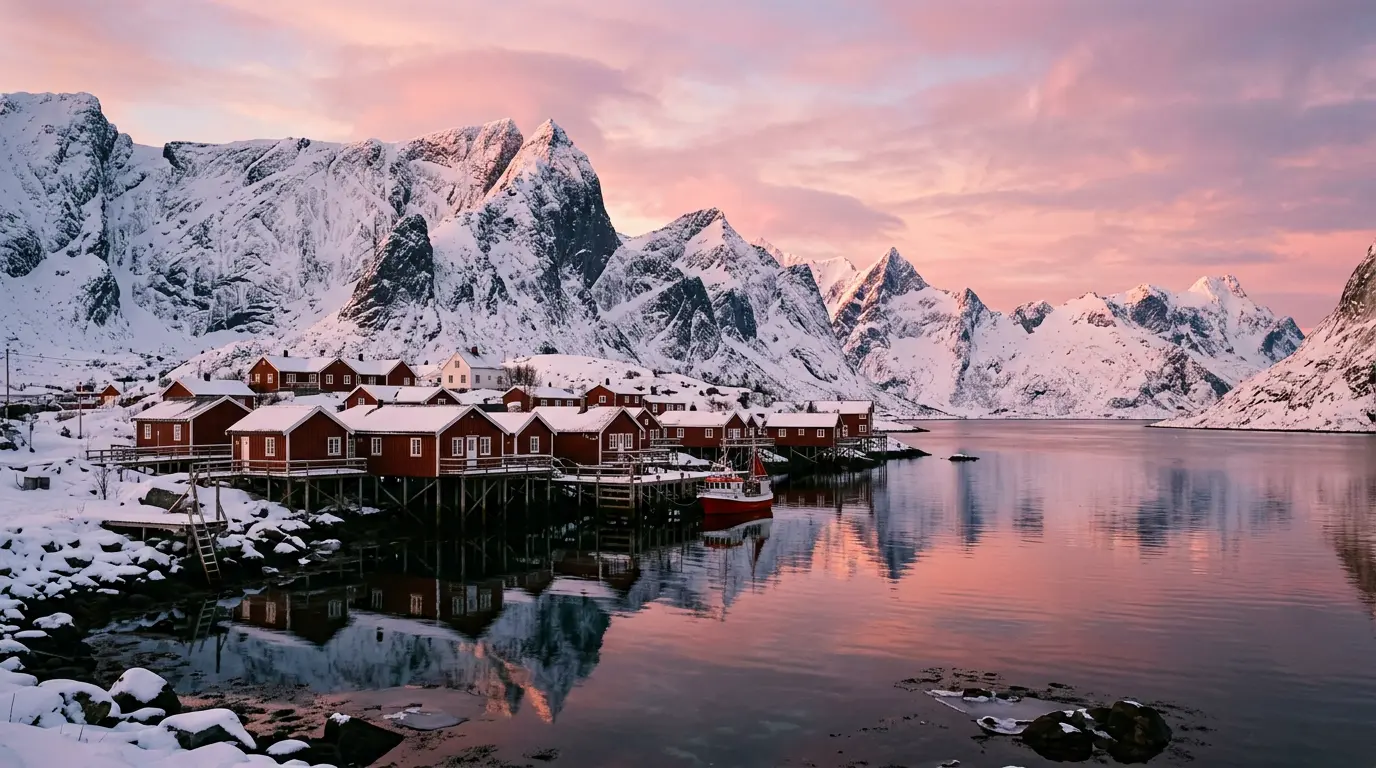
In January, the sun in Lofoten barely clears the mountains. It rolls along the horizon like a coin on its edge, and for four hours the whole archipelago glows in a light photographers spend their lives chasing.
We rented a rorbu — a red fisherman's cabin on stilts — in Hamnøy, and woke each morning to the sound of the sea slapping beneath the floorboards.
Living with the dark
The darkness is the point. Mornings are blue and long. You drink coffee and watch the peaks go from charcoal to lavender to rose. By two o'clock, the light is gone again, and the village lamps come on one by one.
What surprised me was how social the dark makes everyone. The bakery in Reine becomes a living room. Strangers share tables. Everyone is waiting for the same thing: a clear night and the aurora.
The night it came
On our fifth evening, the forecast app showed a Kp of 4. We drove to Skagsanden beach, set up tripods in the snow, and waited. At 9:40, a pale green arc rose over Flakstadtind and then — all at once — it began to dance.
- Best months: late January to early March, when daylight returns but nights stay dark.
- Drive carefully. The E10 is beautiful and icy; studded tyres are non-negotiable.
- Dress in wool. Layers, always layers.
The Arctic winter is not an absence of light. It is light, concentrated.